

Hello, friends! Happy Wednesday!
We’re quickly approaching April 15, which is the individual federal income tax return filing deadline. 2026 Q1 estimated tax payments are also due then.
And while I already filed my 2025 tax return in February, I’m gearing up to make my Q1 2026 estimated tax payments.
In my state, I’m also responsible for paying local and state income taxes. So I’ll be scheduling three separate payments. Exciting stuff! 😅
Anyway, this got me thinking about how stressed I used to feel managing my estimated tax payments. I wasn’t managing them well at all. The issue was I wasn’t stashing away money regularly, which caused added chaos and stress.
This was my routine for a while:
A few weeks before a quarterly payment was due, I’d stare at my checking account balance, wondering how I was going to magically come up with the necessary funds.
Then came the scramble: I would chase last-minute writing projects, hoping that I could earn enough money to make up for my poor planning.
Luckily, those days are long behind me. I have a system in place that ensures I’m prepared. In this newsletter, I’ll explain what I do now.
A quick reminder before we dive in further: I’m not a tax professional. If you have tax-related questions, please reach out to a qualified expert for guidance.
Here’s why estimated tax payments matter
Let’s start with an overview.
Why do freelancers need to make estimated tax payments? The IRS requires workers to pay taxes as they earn income.
W-2 workers have taxes withheld from their paychecks. But freelancers manage their own taxes. That means they must set aside money to cover their tax bill and make estimated tax payments.
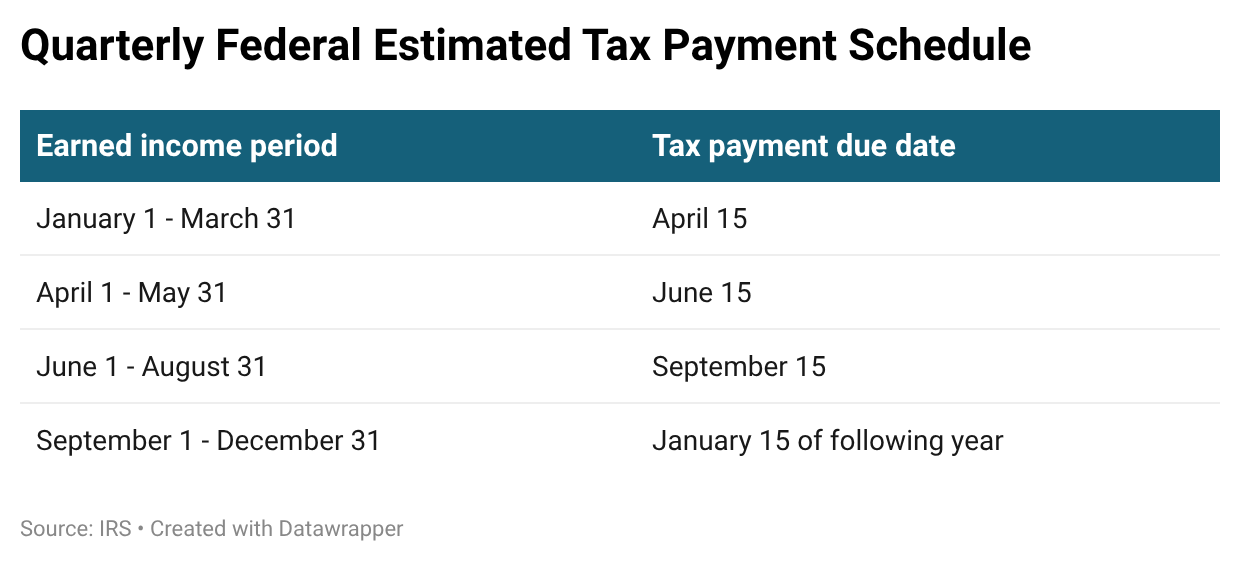
The IRS outlines four payment periods throughout the year. Freelancers are responsible for making estimated tax payments for each period.
Here are the due dates for federal estimated tax payments for each quarter:
If you skip quarterly estimated tax payments or underpay, the IRS will hit you with underpayment penalties. It’s best to make payments every quarter.

Goodbye chaos, hello calm
Luckily, remembering to schedule my tax payments has never been an issue for me. (THANKS, ANXIETY!) Every year, I mark the four due dates on my work calendar. These reminders keep me on track.
What I struggled with before was actually remembering to set aside a portion of my income regularly. So how do I save up throughout the year so I have enough money to make my payments?
Similar to my approach to saving up for paid time off as a freelancer, I lean into automation. I have an automatic transfer set up through my bank. Every two weeks, a set amount of money is automatically transferred from my checking account to my savings account.
This strategy works really well for me. Since I’m regularly setting aside money, I’m not left scrambling to come up with enough funds to cover my tax payments every quarter. I’m more able to focus on running and managing my business well.
As for making the payments, I like to manually schedule my quarterly estimated payments rather than scheduling them in advance for the whole year. About a week before the due date, I log in to my payment portal of choice and schedule my next payment.
This gives me a chance to review my recent earnings. And if necessary, I make adjustments to the payment amount before scheduling my next payment.
Want to schedule your payments ahead of time? The EFTPS and IRS Direct Pay allow you to schedule payments up to 365 days in advance. You can do this with third-party software solutions, too.

What can freelancers experiencing income changes do?
Has your income been all over the place lately? If you’re navigating inconsistent income in your current chapter of life, automation may not be ideal.
Here’s another way to manage things so you have enough money saved up by the time the next due date rolls around.
At the end of each month, transfer a portion of your earnings to your savings account to cover your tax responsibility for that month.
But make sure you do this every month so you’re making consistent contributions to your savings account to have enough money to fund your next payment.
If you do this manual savings approach, I suggest scheduling a reminder on your phone or marking it on your calendar so you don’t forget.
Simplify your finances and life
Now that I’m no longer having to remember to manually stash away tax funds, I feel much less financial stress.
It can be beneficial to look for ways to simplify your finances. How you manage your estimated tax payments is just one example.
If how you’re managing your finances is no longer working for you, it may be time to make some changes. Freeing up your time and energy and reducing your stress can be a major win.
There's a subject every freelancer hates to think about.