

Good morning! ☀️
Welcome to week four of Finance for Freelancers! In honor of Women’s History Month, this week’s newsletter content and format will be different.
I’ve been thinking about how just over 50 years ago, it was legal for banks to discriminate against women who applied for credit. 😐
Banks were legally allowed to require women to have male co-signers to open credit cards or take out loans, regardless of their income.
Until October 1974, when the Equal Credit Opportunity Act was signed into law. The ECOA made it illegal for banks to discriminate based on sex or marital status.
I’m 38. I was a senior in high school when I opened my first credit card. I’m horrified that this law only became a reality 13 years before I was born.
But I appreciate the many women who championed women’s rights and fought for women’s financial independence.
With that in mind, I’m devoting this week’s newsletter to celebrating several women who shaped financial history.
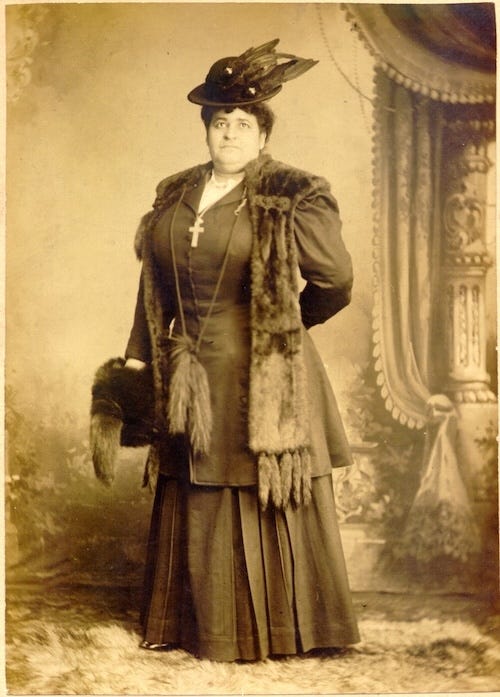
Maggie Lena Walker
Maggie Lena Walker was a successful businesswoman and civic leader who became the first woman to charter a bank in the U.S.
At 14, she joined the Independent Order of St. Luke (IOSL). The organization promoted Black economic independence and provided mutual aid and community support to its members.
She worked as a teacher for three years. After resigning from her teaching job (because school policy prohibited married women from teaching), she began working for the IOSL. She worked in various roles.
In 1899, she was elected as the Right Worthy Grand Secretary, the organization’s highest leadership role. She assumed the role when the IOSL was on the verge of bankruptcy. Walker wasn’t deterred, seeing it as an opportunity.
Through her hard work, she saved the IOSL from bankruptcy. She also rebuilt the organization, growing its membership and expanding its mission.
In 1903, she founded the St. Luke Penny Savings Bank in Richmond, Virginia. Walker wanted to provide a safe place for Black families to save and borrow. She hoped to empower her community by fostering financial independence.
She did that and more. By 1920, the bank issued over 600 mortgages, helping hundreds of Black families become homeowners.
Walker spent her entire life championing her community. She’s credited with creating the St. Luke Herald, a community newspaper.
She founded the St. Luke Emporium department store, which gave Black customers a dignified and safe place to shop amid racial segregation.
She also led a citywide boycott against segregated streetcars and promoted women’s suffrage.
Read more: National Women’s History Museum
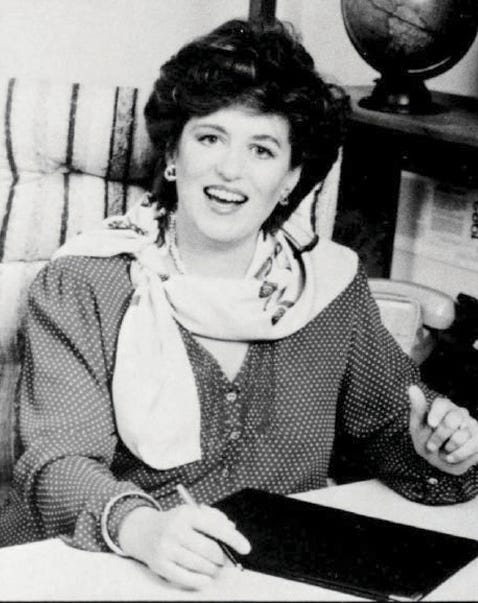
Emily Card, PhD
We can’t discuss the Equal Credit Opportunity Act (ECOA) without highlighting the advocacy work of Emily Card, PhD.
In the early 1970s, while serving as a legislative fellow for Senator Bill Brock, she helped draft the ECOA's legislative language.
Card herself had experienced discrimination when applying for credit. Despite earning more than her husband, she was denied credit when applying for a credit card in her own name.
She collected evidence to convince Senator Brock that a new national law was necessary. Card coordinated with women’s rights groups to gather personal stories from women who had been discriminated against by banks.
Card was present on the Senate floor when the legislation was passed in 1974.
President Ford signed the bill into law in October 1974. In 1976, he signed an amendment to the law to expand its protections beyond sex and marital status. The amendment broadened its reach to prohibit discrimination based on race, color, religion, national origin, age, and receipt of public assistance.
Card has continued to advocate for women’s financial independence as an educator and author. She authored and co-authored several personal finance books and hosted the television show It's Your Money.
While on faculty at USC, she founded the Women’s Credit Project. She also founded and directed the Women’s Credit and Finance Project at Harvard University.
Learn more: Smithsonian American Women’s History Museum
It’s worth mentioning that the late Justice Ruth Bader Ginsburg helped pave the way for the ECOA. In the 1970s, she led the fight against gender discrimination.
While serving as a volunteer attorney for the ACLU, she argued six landmark cases before the U.S. Supreme Court. She also founded the ACLU’s Women’s Rights Project.
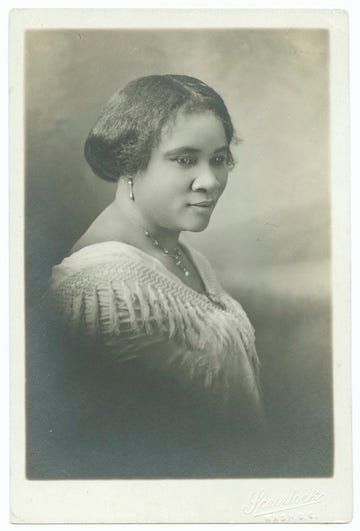
Madam C. J. Walker
Born Sarah Breedlove to formerly enslaved parents, Madam C. J. Walker became the first self-made female millionaire in the U.S.
Orphaned at age seven, she spent her early years working as a child laborer and then a washerwoman.
She escaped poverty by developing specialized haircare products for Black women. Her personal experience with several scalp ailments, including hair loss, led her to create the “Walker System.” The system paired hair products and scalp treatments with hot combs.
After getting married in 1906, she began going by Madam C. J. Walker. She started selling her hair care products door-to-door, teaching other Black women how to care for their hair.
In 1908, she moved to Pittsburgh and founded a factory and training school, called Lelia College, named after her daughter.
At the school, she taught women how to be "hair culturists.” She trained and employed 40,000 Black women as sales agents. Her business model ensured that her agents earned enough to gain financial independence.
After her divorce in 1910, she relocated to Indianapolis and built a factory for the Walker Manufacturing Company. She also built a hair and nail salon and another training school. Walker was a very successful entrepreneur. She became the first self-made woman millionaire in the U.S. by the time of her death in 1919.
Walker was also a philanthropist who supported civil rights and education programs. She contributed to the Young Women’s Christian Association (YWCA), covered tuition for students at Tuskegee Institute, and funded anti-lynching efforts run by the NAACP.
Upon her death, Walker left two-thirds of future net profits to charity and donated nearly $100,000 to various orphanages, institutions, and schools.
Learn more about her life and legacy: Madam Walker Legacy Center
Thanks for going on a historical deep dive with me today. I enjoyed researching these women and learning about their many achievements. I originally hoped to highlight 4-5 women in this piece, but my ADHD brain couldn’t stop talking about these 3 incredible women.
Are you interested in occasional deep dives like this? Let me know by replying to this email.
Cheers to the many women who fought for women’s financial independence and advocated for their communities.
I’ll see you next Wednesday! ❤️
I'm always up for a historical deep dive, and I loved this one!!! You did a great job describing their impact on opening up financing and financial opportunities!